
Weather-Damaged Wood Restoration
Restore weathered, faded and damaged wood with professional cleaning, careful repairs, sanding and protective finishing that revives its natural appearance and improves long-term durability.
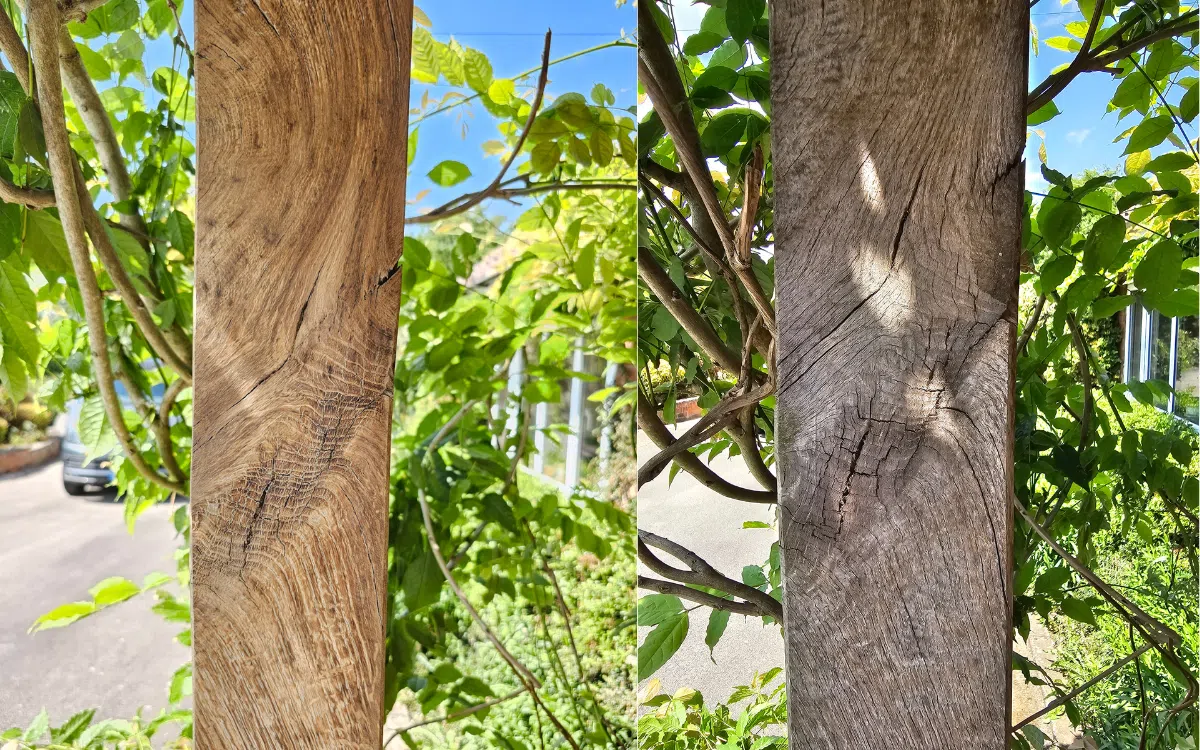
Recovering Weathered Timber
Why the Right Weather-Damaged Wood Restoration Matters
Prolonged exposure can leave timber grey, rough, stained or protected by a failing coating. A condition-led restoration process removes unsuitable material, addresses repairable damage and prepares the wood for renewed protection.
- Assessment of weathering, moisture effects, coatings and timber condition
- Removal of failed finishes and suitable degraded surface fibres
- Localised repairs and surface correction where appropriate
- Protective finishing selected around exposure and intended use
Signs of Weather Exposure
When Weathered Timber Needs Restoration
Sun, rain and changing moisture levels can gradually break down exposed timber and its protective coating. Early assessment helps establish whether the material can be restored and protected.
Arrange a Timber Assessment →Greying & UV Fading
Sunlight and exposure can fade the original colour and leave unprotected timber grey, pale and visually uneven.
Peeling or Failed Coatings
Cracked, flaking or lifting finishes allow further moisture exposure and must be removed before refinishing.
Water Staining & Raised Grain
Repeated wetting can leave dark marks, rough fibres and an uneven texture across exposed timber.
Cracks & Local Deterioration
Surface splitting, open joints and repairable local damage are assessed before restoration work begins.
Not every timber section can be saved. Soft, rotten or structurally unsound wood may require local replacement before any restorative finishing is carried out.
Restoration Suitability
Can the Weathered Timber Be Restored?
Weathering does not always mean the timber needs replacing. We assess surface erosion, moisture effects, coating failure, joints and the underlying timber before confirming whether restoration, local repair or replacement is the appropriate route.
Surface Weathering
Greying, UV fading, raised grain, water marks and peeling protective coatings can often be improved where the underlying timber remains sound and suitable for refinishing.
Localised Deterioration
Small cracks, open joints, isolated soft areas and damaged edges may require compatible local repairs before cleaning, controlled refinement and renewed protection begin.
Severe Decay or Failure
Extensive rot, major movement, deeply failed timber or a continuing moisture source may make partial or complete replacement more appropriate than cosmetic restoration.
The source of moisture must be addressed first. Renewed finishing cannot provide a dependable result while leaks, trapped moisture or failed detailing remain unresolved.
Arrange a timber assessment →From Weathered Timber to Renewed Protection
Every stage is selected around the timber condition, exposure, existing coating and level of weather damage.
Condition Assessment
We inspect the timber, moisture effects, weathering, failed coatings and any areas that may need repair.
Cleaning & Strip-Back
Surface contamination, loose fibres and suitable failed finishes are removed using a controlled method.
Repairs & Refinement
Repairable local damage is addressed and the timber is progressively prepared for renewed finishing.
Protection & Handover
A suitable protective system is applied around the exposure, timber type and intended use.
Before & After
See Weathered Timber Renewed & Protected
A condition-led restoration process can remove suitable failed coatings and degraded surface material before the timber is repaired, refined and protected again.
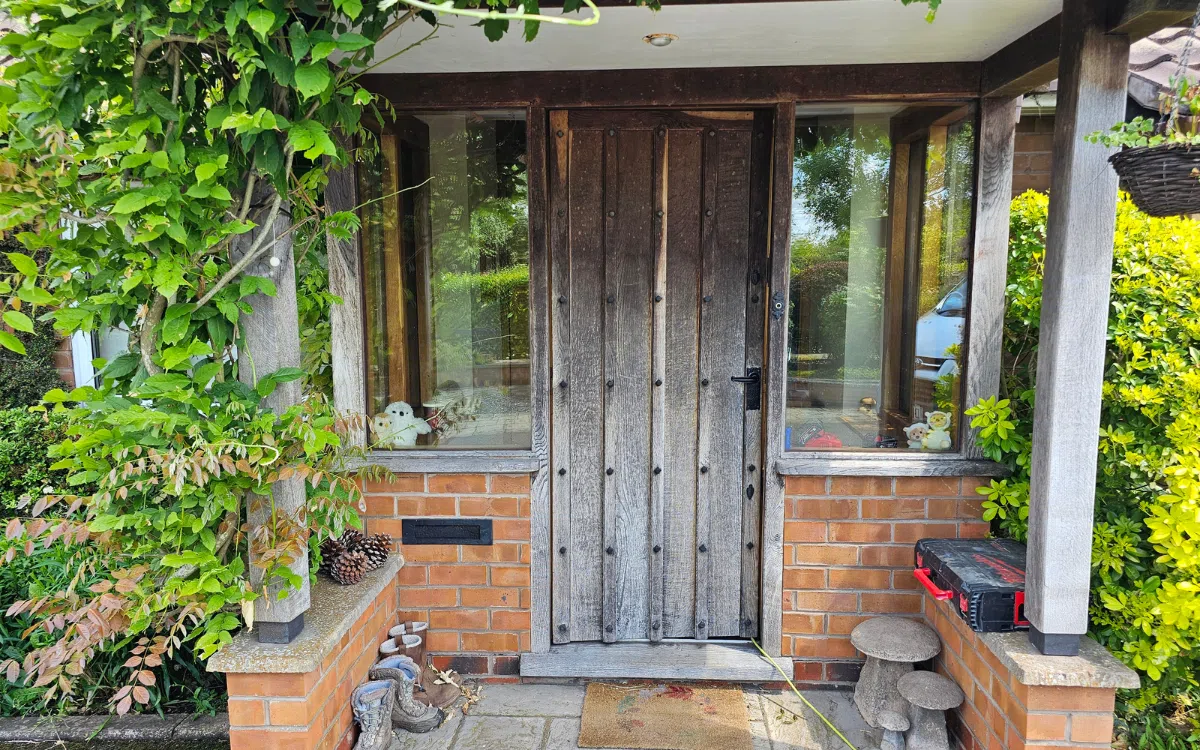 Before
Weathered & Failing Timber
Sunlight, moisture and coating failure leave the surface grey, rough and uneven.
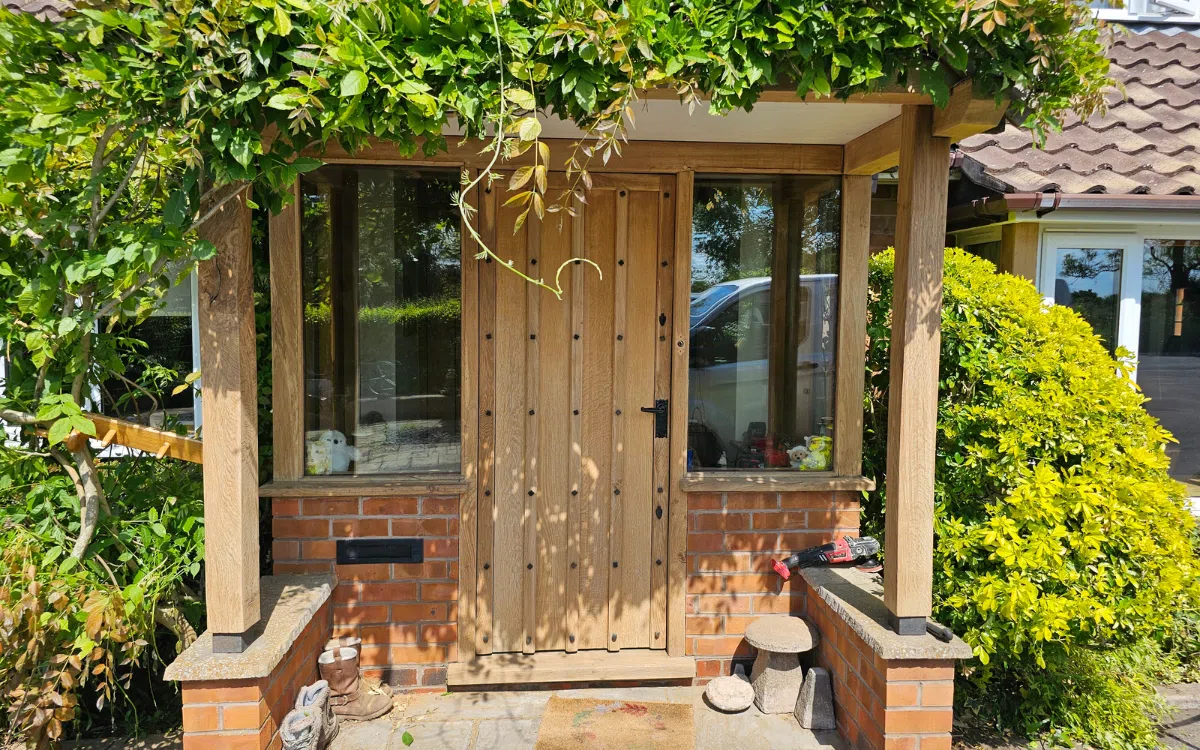 After
After
Restored & Protected Wood
Suitable timber is refined and finished to recover its character and renew protection.
Renewed Protection for Weathered Wood
Suitable Environments
Where Weather-Damaged Wood Restoration Is Used
Our restoration service supports suitable internal and external timber affected by sunlight, rain, moisture, failed coatings and prolonged exposure.
- ✓External doors and timber entrance features
- ✓Window frames, trims and exposed joinery
- ✓Garden rooms, conservatories and timber structures
- ✓Cladding, fascias and decorative exterior timber
- ✓Outdoor furniture and suitable timber features
- ✓Internal wood affected by leaks, damp or UV exposure
Why Choose Us
Restoration Planned Around the Timber Condition
We assess the timber, exposure, moisture effects, existing coating and level of deterioration before recommending repair, surface preparation and renewed protection.
Book a Free Site SurveyExposure & Condition Assessed
Sunlight, moisture, coating failure, greying, splitting and any unsound timber are reviewed before work begins.
Controlled Surface Preparation
Loose fibres, contamination and suitable failed coatings are removed without unnecessary loss of sound timber.
Repairs Before Refinishing
Repairable cracks, joints and localised damage are addressed before the surface receives its protective finish.
Protection Matched to Exposure
The finishing system is selected around timber type, location, weather exposure and the required appearance.
Areas We Cover
Weather-Damaged Wood Restoration Across the Midlands
Based in Studley, we restore suitable internal and external timber affected by weathering, moisture and failed coatings across the Midlands. Larger planned projects can also be assessed in London and further afield.
Call 07564 299605and selected UK projects
West Midlands
Including Birmingham, Solihull and surrounding areas for doors, joinery and timber affected by prolonged exposure.
Worcestershire
Including Worcester, Redditch, Bromsgrove and nearby locations for grey timber, water marks and failed coatings.
Warwickshire
Covering Warwick, Stratford upon Avon, Studley and nearby properties with exposed or moisture-affected wood.
Gloucestershire
Restoration projects assessed according to timber soundness, exposure, damage, access and protective finish requirements.
Not sure whether we cover your location? Send your postcode, timber location, approximate dimensions and clear photographs for confirmation.
Weather-Damaged Wood Restoration FAQs
Answers to common questions about weathering, failed coatings, grey timber, local repairs, protective finishes and ongoing maintenance.
Still have a question? 07564 299605What types of weather-damaged timber can be restored?
Suitable doors, window frames, joinery, cladding, garden structures, furniture and internal timber affected by leaks or sunlight may be restorable. The wood must first be assessed for soundness, moisture and structural condition.
Can grey and faded timber return to its original colour?
Controlled preparation can often remove suitable grey surface fibres and improve colour and clarity. Natural variation, deep UV damage and uneven exposure may mean the restored timber does not return to one completely uniform shade.
What happens if parts of the wood are rotten?
Soft, decayed or structurally unsound wood cannot be corrected by sanding and refinishing alone. Affected sections may need local repair or replacement before a protective finish can be applied.
Does the old coating need to be removed?
Loose, peeling or incompatible finishes normally need to be removed back to a sound, stable surface. Some well-adhered coatings may be retained or prepared differently, depending on the proposed finishing system.
Which protective finish will be used?
The treatment is selected around the timber species, internal or external location, level of exposure, desired appearance and maintenance expectations. No finish removes the need for future inspection and upkeep.
How long will the restored finish last?
Service life varies with sunlight, rain, orientation, moisture, timber movement, preparation quality and maintenance. Exposed timber should be inspected regularly and recoated before the protective layer fails completely.
Early assessment can prevent further deterioration. We confirm which timber can be restored, what repairs are required and which protective system suits the exposure.
Restore weathered
wood with care
Tell us where the timber is located, how it has been exposed and what damage or coating failure is present. We’ll assess whether restoration is suitable and recommend the repairs, preparation and protection required.