
Full-Grind Stone Floor Installation
Stone floors installed using the traditional grind-in-place method, where the entire surface is ground, honed and finished after installation to create one flat, seamless-looking surface.
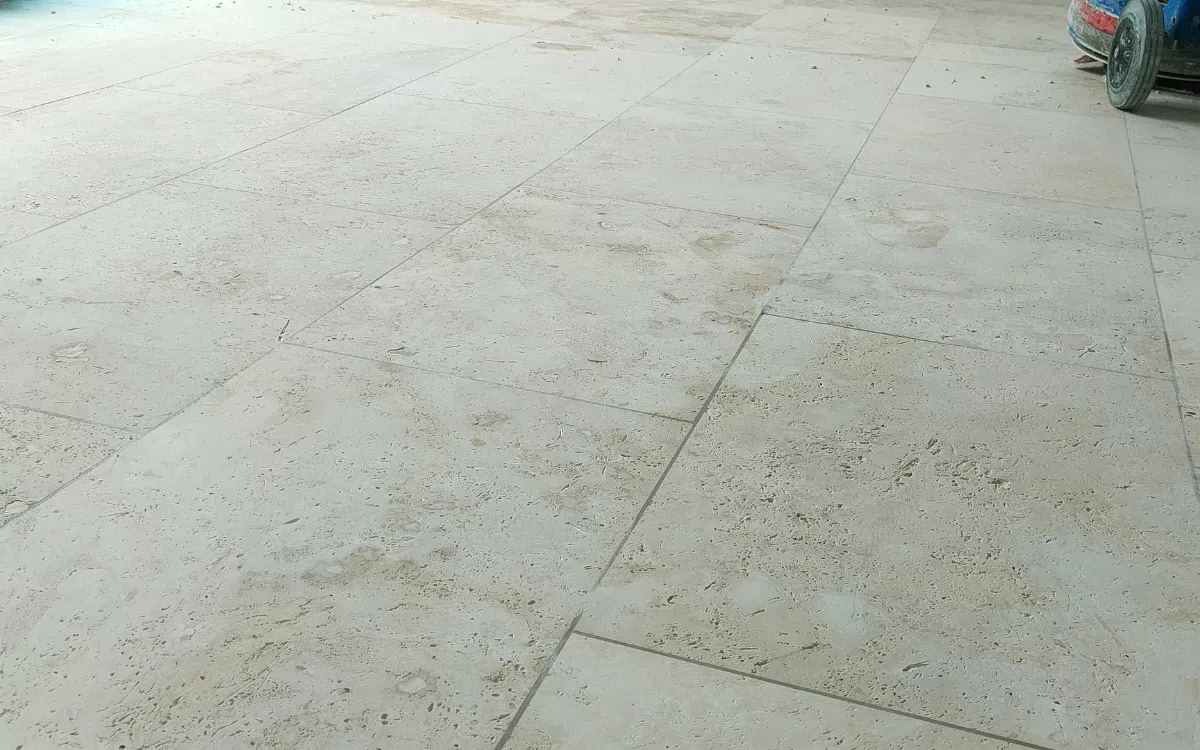
Traditional Grind-in-Place Installation
Why Full-Grind Stone Installation Matters
A truly refined stone floor is created after the tiles are installed. The traditional grind-in-place method grinds the complete installation as one continuous surface before it is progressively honed and polished, rather than relying on the factory finish of each individual tile.
- Full grinding removes lippage between adjoining stone tiles
- A rigid grinding system creates one flat, continuous surface
- Tight joints become less visually dominant after onsite finishing
- Honing and polishing create clearer, more consistent reflection
Stone, Format & Finish Planning
Plan the Stone Floor Before Installation Begins
A successful full-grind installation depends on more than laying the stone. The material, format, substrate, joint layout and final finish must be considered together before work begins.
Stone Selection
Marble, limestone, travertine and other suitable natural stone are assessed for grind-in-place installation.
Format & Thickness
Tile dimensions, thickness and natural variation are reviewed before the floor is set out.
Layout & Joints
Room geometry, joint alignment, movement details and perimeter finishing are planned before laying.
Final Finish
A honed, satin or polished appearance is specified around the stone and intended use of the floor.
Suitability matters. Every stone installation behaves differently. The survey confirms material suitability, floor build-up, access and the finish that can realistically be achieved.
Discuss Your Installation →A Controlled Route from Stone Layout to Final Finish
Every stage is coordinated around the stone, substrate, layout and finish required for the completed floor.
Site Survey & Specification
We assess the substrate, stone selection, layout, levels and intended use of the space.
Base Preparation & Setting Out
The base is prepared and the stone is carefully positioned to achieve the planned layout and joint alignment.
Installation & Full Grinding
The stone is securely installed before the complete floor is rigidly ground to create a flatter, continuous surface.
Honing, Polishing & Protection
The floor is progressively refined to the specified finish before suitable protection and final checks.
See What Full Grinding & Polishing Can Achieve
This comparison shows the stone floor before and after controlled grinding, progressive honing and polishing. The process corrects suitable surface inconsistencies before developing a flatter, clearer and more consistent finish.
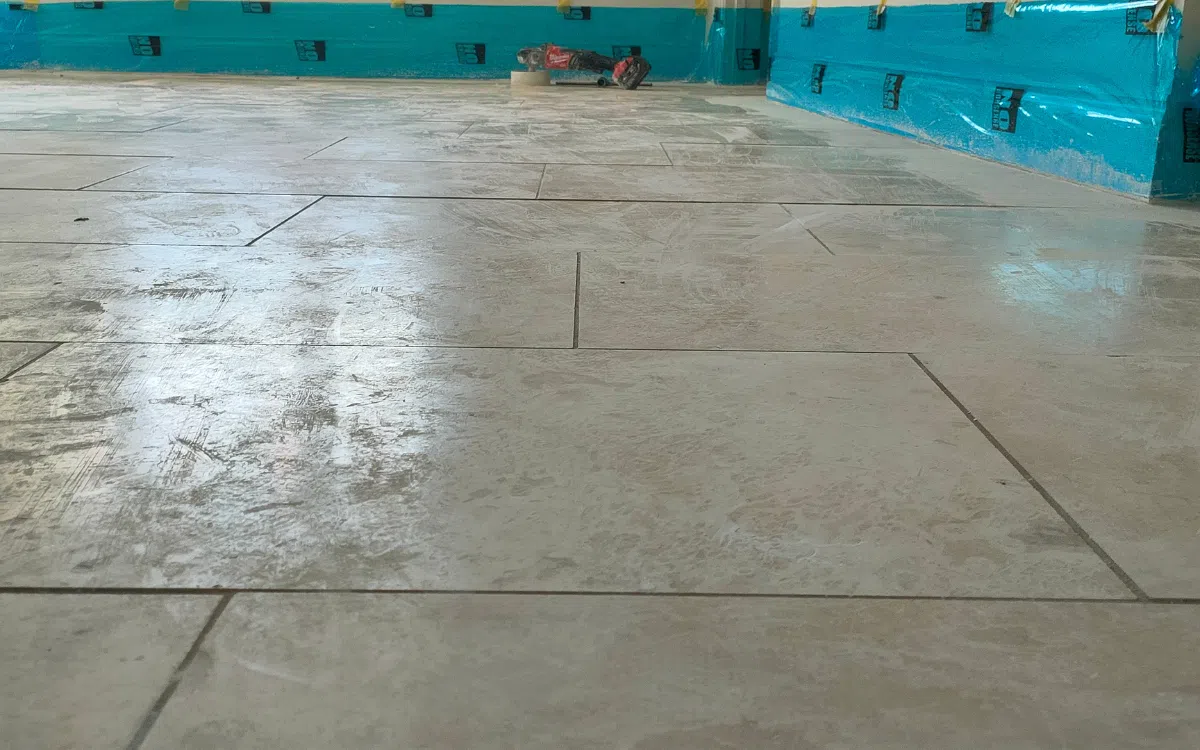 Before Grinding & Polishing
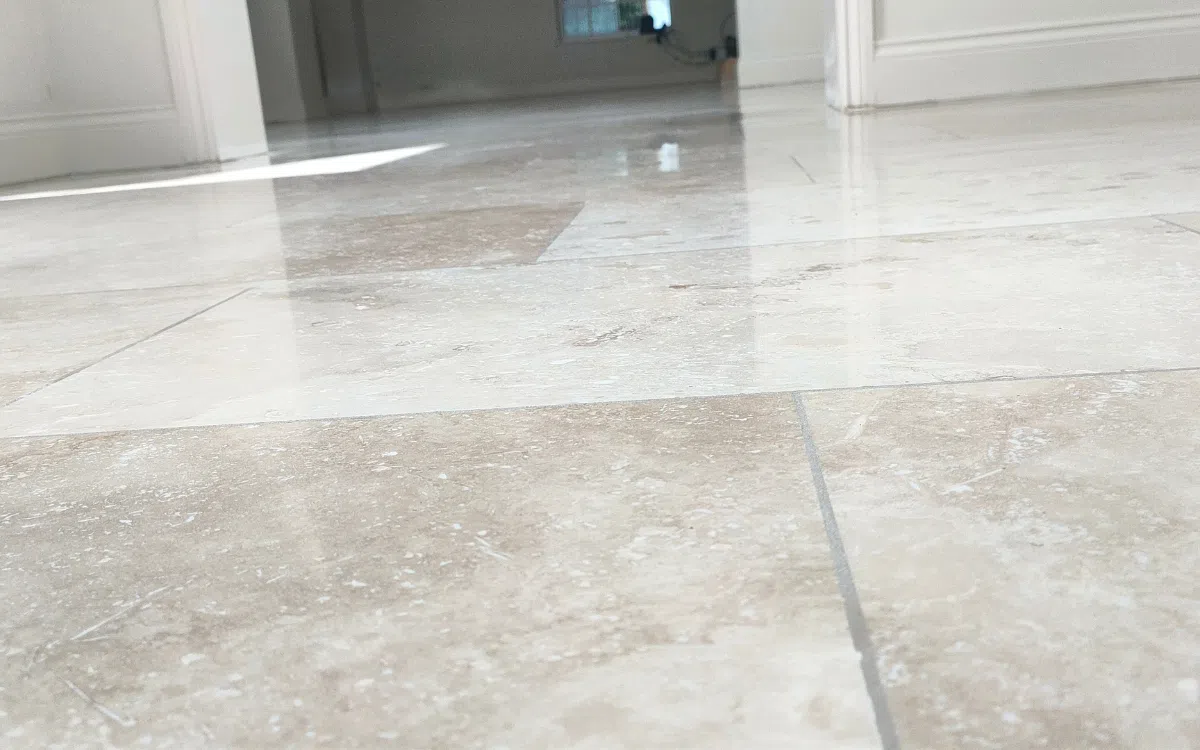 After Grinding & Polishing
The finished appearance is developed onsite. Full grinding corrects suitable lippage and surface variations, while progressive honing and polishing refine the clarity, consistency and sheen of the floor.
A Carefully Installed Stone Floor, Finished as One Surface
Suitable Environments
Where Natural Stone Floor Installation Is Used
Our full-grind stone installation service supports carefully planned new floors and refurbishment projects where levels, detailing and the final finish matter.
- ✓Residential kitchens, hallways and living areas
- ✓Luxury bathrooms and spa environments
- ✓Hotels, restaurants and hospitality interiors
- ✓Retail showrooms and reception areas
- ✓Period properties and high-end renovations
- ✓Commercial entrances and feature spaces
Why Choose Us
Installation Planned Around Your Stone
We assess the substrate, stone format, room layout and required finish before planning a full-grind installation that creates one flatter, consistently finished stone surface.
Book a Free Site SurveySubstrate and Layout Assessed
We inspect levels, access, room geometry, movement joints and the proposed stone layout before installation begins.
Full-Grind Installation Method
The stone is installed and cured before rigid grinding corrects suitable lippage across the completed floor.
Finish Created After Installation
Progressive honing and polishing create the agreed finish across the installation as one continuous stone surface.
Details and Protection Considered
Edges, transitions, final protection and ongoing care are considered around the stone and intended use of the room.
Areas We Cover
Stone Floor Installation Across the Midlands
Based in Studley, we provide professional stone floor installation for residential and commercial projects across the Midlands. Larger planned installations can also be assessed in London and further afield.
Call 07564 299605and selected UK projects
West Midlands
Including Birmingham, Solihull and surrounding areas for natural stone floor installation in homes, renovations and commercial interiors.
Worcestershire
Including Worcester, Redditch, Bromsgrove and nearby locations for carefully planned residential and commercial stone flooring projects.
Warwickshire
Covering Warwick, Stratford upon Avon, Studley and surrounding areas for limestone, marble, travertine and other natural stone installations.
Gloucestershire
Stone floor installation projects assessed according to the stone type, subfloor condition, room layout, project scale and site access.
Not sure whether we cover your location? Send your postcode, approximate floor area, preferred stone type and project details for confirmation.
Stone Floor Installation FAQs
Common questions about traditional grind-in-place stone installation, full grinding, lippage removal and creating a flat, consistently finished floor.
Still have a question? 07564 299605What is a grind-in-place stone floor installation?
Grind-in-place is a traditional installation method where the stone is laid and allowed to cure before the entire floor is rigidly ground, honed and polished. This creates the finished surface after installation rather than relying on the factory finish of each individual tile.
Why do you only install stone floors using a full grind?
Installing factory-polished tiles can produce a shiny floor without guaranteeing that every tile sits on the same plane. Full grinding controls the geometry of the completed floor, reduces lippage and creates a flatter, more consistent surface before honing and polishing.
How does full grinding remove lippage?
After the installation has cured, a rigid grinding system cuts across raised tile edges and mechanically brings adjoining pieces into a flatter, more consistent surface. The rigidity is important because the abrasive must cut the high points of the stone rather than follow and round the individual tile edges.
What happens after the stone tiles are installed?
Once the installation has cured, the floor progresses through rigid full grinding, finer grinding stages, honing and finally polishing. The exact abrasive sequence and final finish are selected according to the stone and the required appearance.
Is the final polish created after installation?
Yes. The final clarity and gloss are produced on site after the floor has been rigidly ground and honed. Because the complete installation is finished as one surface, reflected light can travel more consistently across adjoining pieces of stone.
Does a flatter floor help protect the stone edges?
Removing raised edges makes them less exposed to direct impact and concentrated loads from small hard wheels. While natural stone can still be damaged,a properly ground, flatter floor reduces the vulnerable high points associated with edge chipping, corner damage and joint spalling.
Every stone floor installation is different. A site assessment helps us evaluate the substrate, stone, layout and required full-grind finish.
Discuss your installation
Plan your full-grind
stone floor installation
Tell us about the stone, room and finish you want to achieve. We install stone floors using the traditional grind-in-place method, finishing the entire surface after installation.