
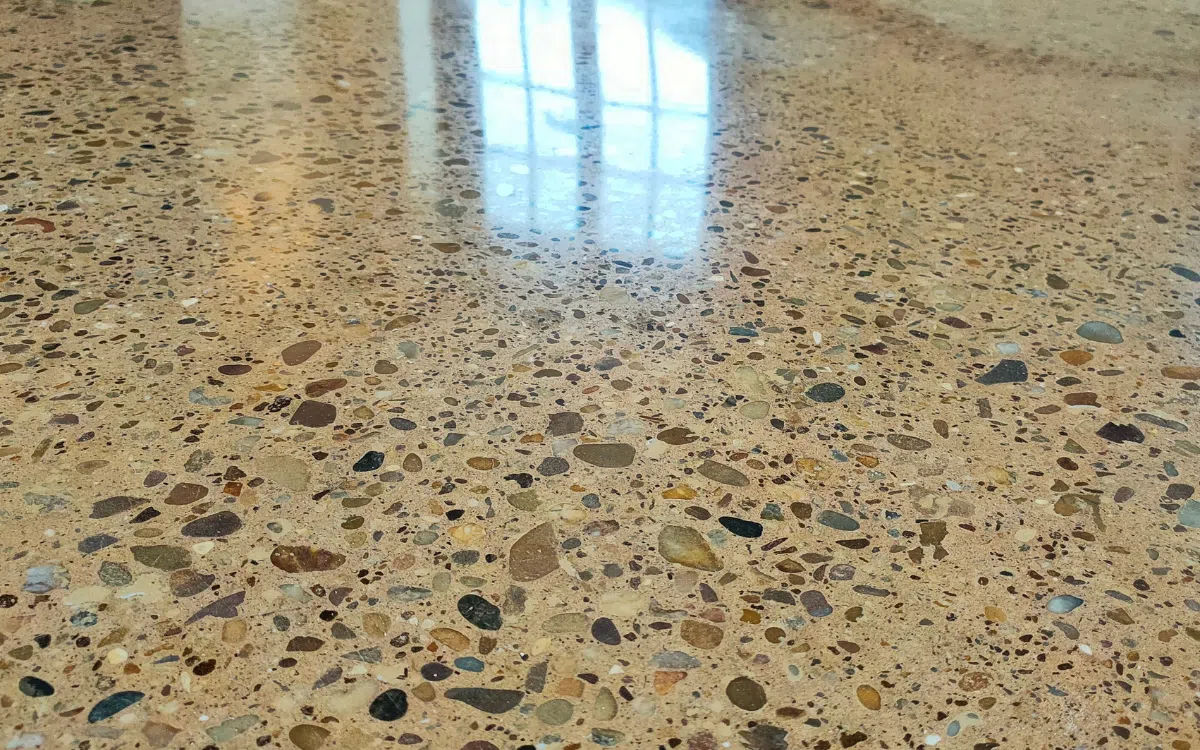
Concrete Grinding & Polishing Services
Transform suitable existing concrete into a refined finished floor. We assess the slab, select an appropriate grinding depth and progressively polish the surface, working with its existing mix, hardness and finish to achieve the best suitable result.
From Existing Slab to Finished Floor
Why Slab Assessment, Grinding and Polishing Matter
Every existing slab responds differently to mechanical grinding. Its hardness, original mix, placement and previous surface treatment influence the exposure and variation that appear, so we assess the concrete carefully before recommending a realistic polished finish.
- Grinding depth selected around the condition and response of the existing slab
- Aggregate exposure assessed realistically rather than guaranteed
- Progressive polishing to develop the appropriate level of refinement and sheen
- Edges and detailed areas treated alongside the main concrete floor
What Your Existing Concrete May Reveal
Grinding depth influences how much aggregate becomes visible, but the finished appearance is determined by the existing slab. Its mix, hardness, original placement, surface finish and previous treatment can all affect the amount and consistency of aggregate exposure.
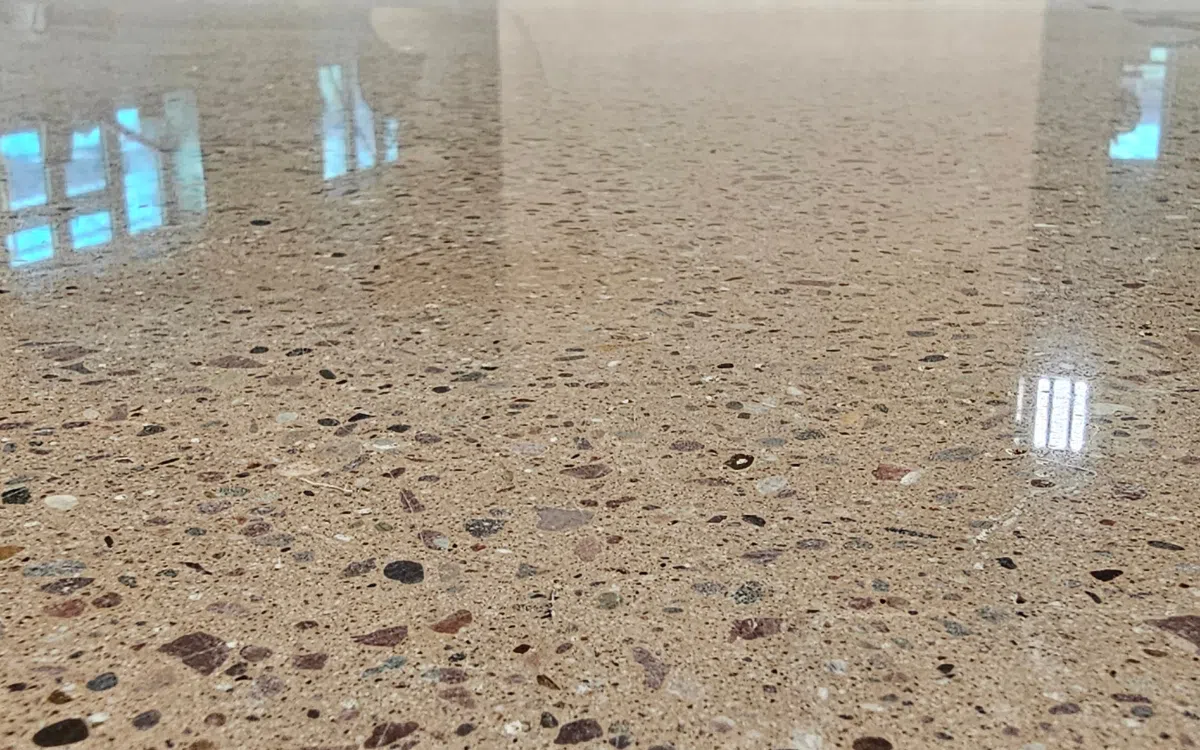
Possible Outcome
Light / Minimal Exposure
A shallow grinding approach may retain more of the original surface and reveal relatively little aggregate. The achievable result depends on the hardness, finish and consistency of the concrete.
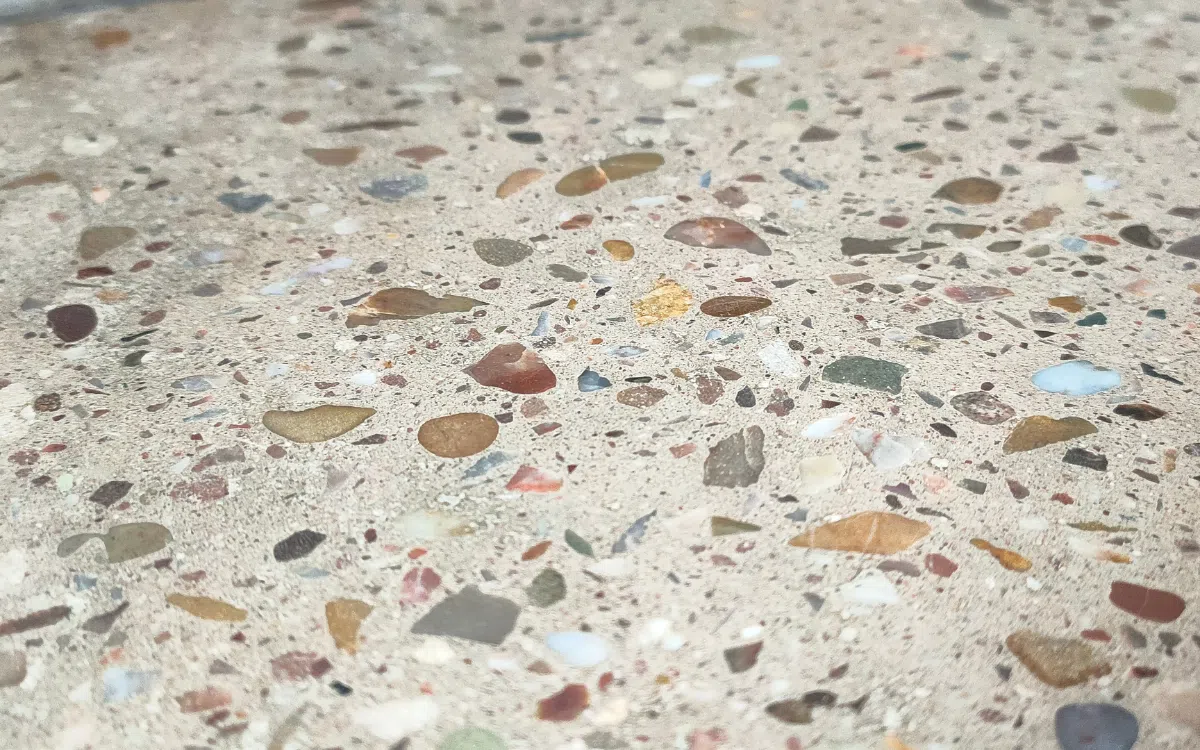
Slab Dependent
Fine / Salt & Pepper
A salt-and-pepper appearance is generally more achievable on harder, well-finished concrete. Softer or uneven concrete may expose more aggregate before a consistent surface can be produced.
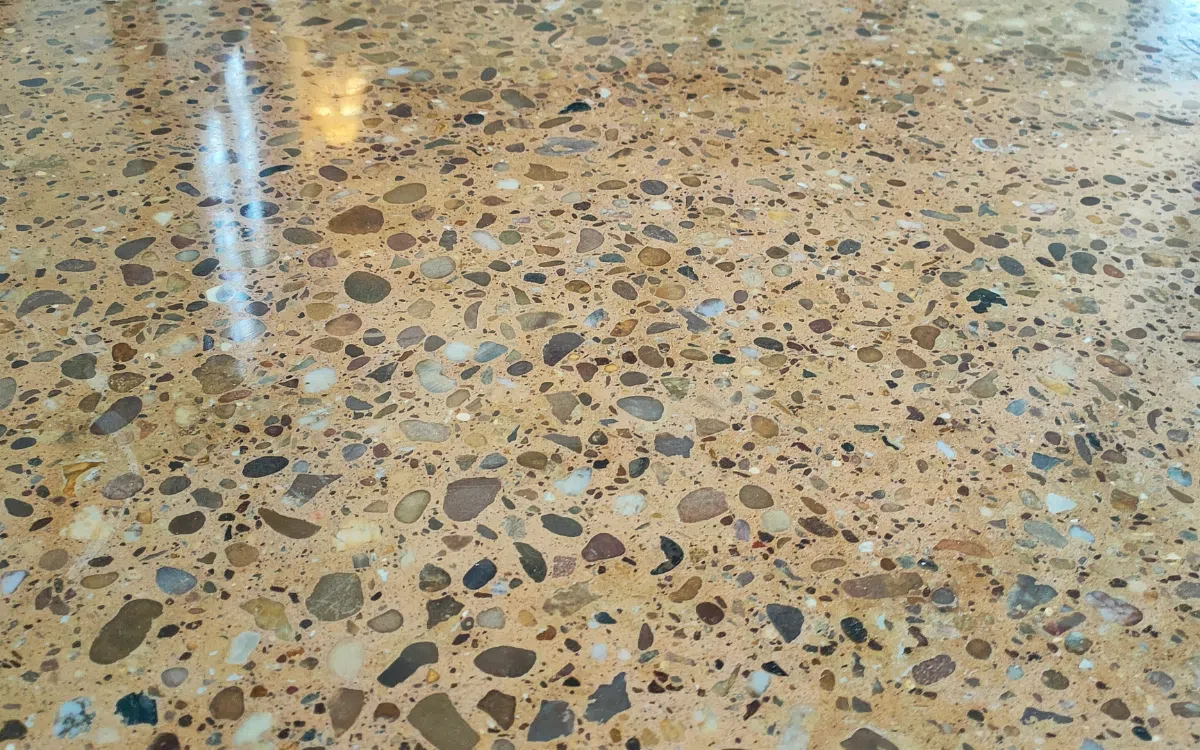
Deeper Grinding
Deeper / Fuller Exposure
Deeper grinding can reveal more aggregate, but its size, colour, distribution and consistency are determined by the original concrete. Natural variation across the floor should be expected.
Aggregate exposure is assessed, not guaranteed. Grinding depth can be adjusted, but the existing slab determines the final aggregate pattern. Sheen is developed separately through progressive polishing.
Discuss your floorGrinding and Polishing Planned for Your Floor
We assess the slab, likely aggregate exposure, required sheen and intended use before specifying a suitable grinding and polishing process.
Book a Free Site Survey →-
→
Initial Concrete Grinding
Initial grinding establishes the surface and reveals how the existing concrete responds to mechanical refinement..
-
→
Coating and Residue Removal
Suitable previous surface materials are removed before refinement.
-
→
Aggregate Exposure Assessment
Grinding depth is selected around the slab’s response and the amount of aggregate that may realistically be revealed.
-
→s
Progressive Polishing
Successively finer stages refine the surface and develop the specified sheen.
-
→
Edge and Detail Refinement
Perimeters and detailed areas are refined alongside the main floor.
-
→
Finish Specification
The final polish is planned around the slab, space and intended use.
From Floor Assessment to Polished Finish
Every stage is planned around the slab condition, its response to grinding and the appropriate level of surface refinement and sheen.
Floor Assessment
We inspect the slab, previous treatments, cracks, repairs and suitability for polishing.
Initial Grinding
The initial grinding stage reveals the slab’s likely aggregate exposure and helps determine the appropriate depth of further grinding.
Progressive Refinement
Progressively finer polishing stages refine the concrete and develop the specified finish.
Final Finish
The required sheen is completed and the floor is checked against the agreed specification.
Before & After
See What Grinding & Polishing Can Reveal
Existing concrete can change dramatically once the worn upper surface has been mechanically refined. The final appearance is shaped by the slab itself, including its aggregate, repairs and natural variation.
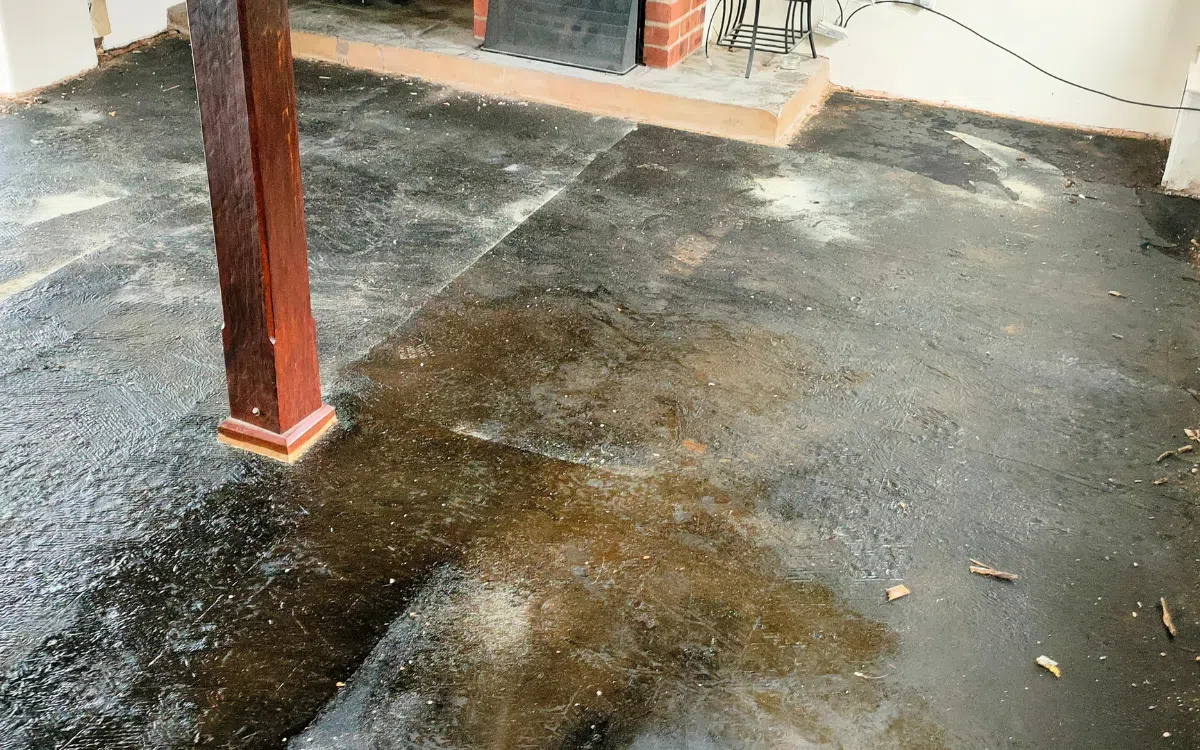
Before
Existing Concrete
The original slab before bitumen removal, mechanical grinding and progressive surface refinement.
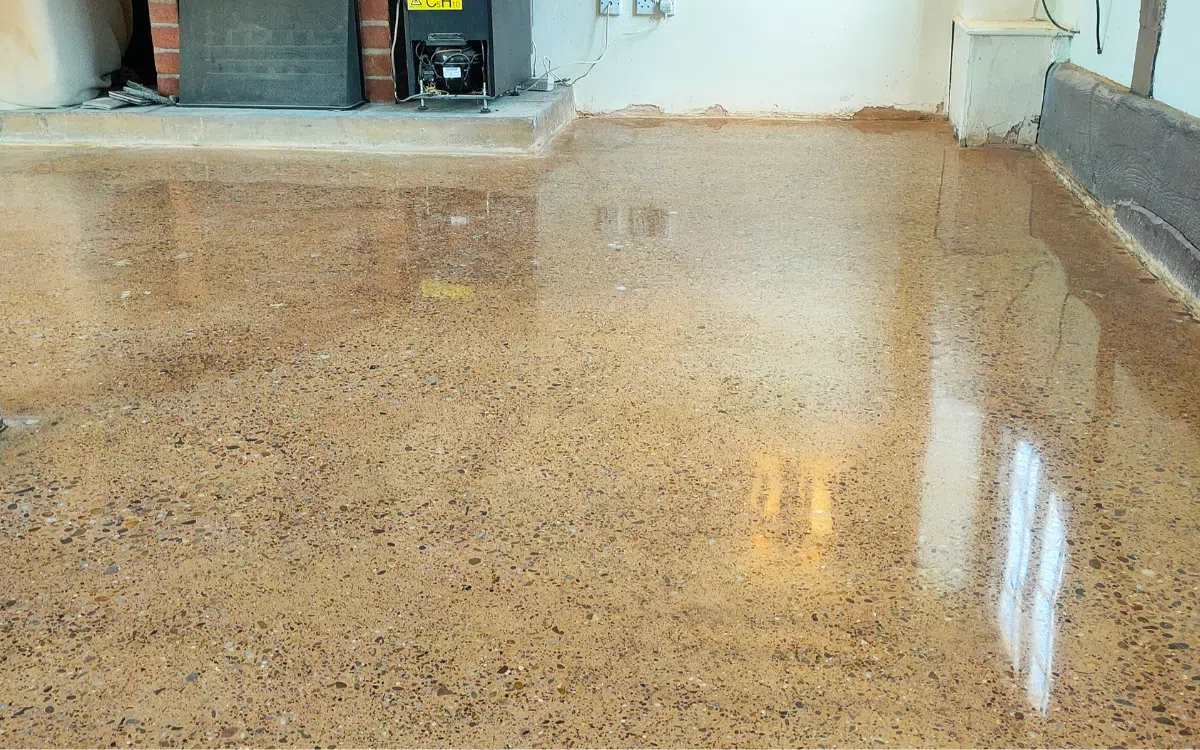
After
Refined Polished Finish
Grinding, progressive refinement and polishing reveal the natural character of the floor.
A Refined Finish Built Into the Concrete
Suitable Environments
Where Concrete Grinding & Polishing Is Used
Our concrete grinding and polishing services create practical finished floors for residential, commercial and industrial environments.
- ✓ Homes and contemporary interiors
- ✓ Retail and hospitality spaces
- ✓ Offices and reception areas
- ✓ Showrooms, studios and display spaces
- ✓ Warehouses and industrial units
- ✓ Garages, workshops and basements
Why Choose Us
Polishing Planned Around Your Concrete Floor
We assess the existing slab, explain the likely aggregate exposure and match the grinding and polishing process to a realistic finish for your space.
Book a Free Site SurveyExisting Slab Assessed
We inspect the concrete condition, previous treatments, cracks, repairs and overall suitability before confirming what finish is achievable.
Likely Exposure Assessed
Grinding depth is planned around the amount of natural aggregate to be revealed and the existing construction of the concrete slab.
Progressive Surface Refinement
Progressively finer polishing stages refine the concrete surface and develop the agreed level of sheen while retaining the slab’s natural variation.
Finish Suited to the Space
The final appearance is specified around the slab, intended use, maintenance expectations and realistic finish outcome.
Areas We Cover
Concrete Grinding & Polishing Across the Midlands
Based in Studley, we provide specialist concrete grinding and polishing for residential, commercial and industrial floors across the Midlands. Larger planned projects can also be assessed in London and further afield.
Call 07564 299605and selected UK projects
West Midlands
Including Birmingham, Solihull and surrounding locations for residential, commercial and industrial concrete grinding and polishing.
Worcestershire
Covering Worcester, Redditch, Bromsgrove and surrounding locations for suitable existing and newly installed concrete floors.
Warwickshire
Covering Warwick, Stratford upon Avon, Studley and nearby residential and commercial polished concrete projects.
Gloucestershire
Grinding and polishing projects assessed according to slab condition, finish requirements, project scale and site access.
Not sure whether we cover your location? Send your postcode, floor condition and finish requirements for confirmation.
Concrete Grinding & Polishing FAQs
Common questions about transforming suitable existing concrete, assessing likely aggregate exposure and developing a progressively refined polished finish.
Still have a question? 07564 299605Can an existing concrete floor be ground and polished?
Many existing concrete floors can be transformed through grinding and polishing. We first assess the slab for its condition, previous treatments, repairs, cracks and overall suitability before confirming what finish is realistically achievable.
How much aggregate can be exposed?
Deeper grinding can reveal more aggregate, but the final result depends on what already exists within the slab. The concrete mix, hardness, original placement and surface finish can cause exposure to vary across the floor. A precise or completely uniform aggregate pattern cannot be guaranteed.
Is aggregate exposure the same as the level of polish?
No. Aggregate exposure is influenced by the grinding depth and the way the existing slab responds. Sheen is developed separately through progressively finer polishing stages. Although deeper grinding can reveal more aggregate, its pattern and consistency cannot be guaranteed.
Will cracks, patches and previous repairs still be visible?
They may be. Existing cracks, patches and repairs can remain visible after polishing and often become part of the natural character of the finished floor. We assess these areas before grinding begins and discuss how they may influence the result.
Can old coatings, paint or adhesive be removed first?
Many existing coatings, paints and adhesive residues can be mechanically removed before polishing. The exact preparation depends on the material being removed and the condition of the concrete underneath.
Can I choose the exact colour of an existing polished floor?
Existing concrete already contains its own cement tones, sand, aggregate and natural variation, so the final colour cannot usually be controlled in the same way as a newly specified decorative system. A survey allows us to explain the likely appearance before work starts.
Is polished concrete suitable for commercial floors?
Polished concrete can work well in many shops, offices, showrooms, hospitality spaces and other commercial environments. Suitability depends on the slab condition, expected use and the finish specification required for the space.
How do you decide which grinding and polishing process to use?
We assess the concrete’s hardness, condition, previous coatings, repairs and response to grinding. We then select an appropriate grinding depth and refinement sequence around the likely exposure and realistic finish that the existing slab can produce.
Every existing concrete slab is different. A site survey helps confirm the likely aggregate exposure, preparation requirements and realistic finish expectations before work begins.
Transform your existing
concrete floor
Tell us about your existing concrete and the finish you want. We’ll assess the slab, its condition and natural character, then advise on the appropriate grinding depth, aggregate exposure and polished finish.