Historic Quarry Tile Restoration

Historic tile restoration case study

Historic Quarry Tile Restoration at Ipswich Museum

How we carefully restored original Victorian quarry tiles within Ipswich Museum, improving safety and usability while preserving the character of this Grade II listed building.

  • Grade II listed museum
  • Victorian quarry tiles
  • Ipswich, Suffolk
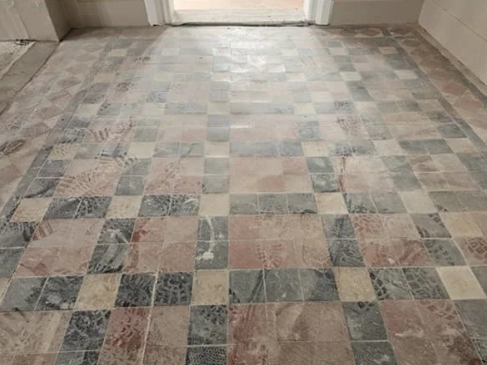
Historic quarry tile floor before restoration Before
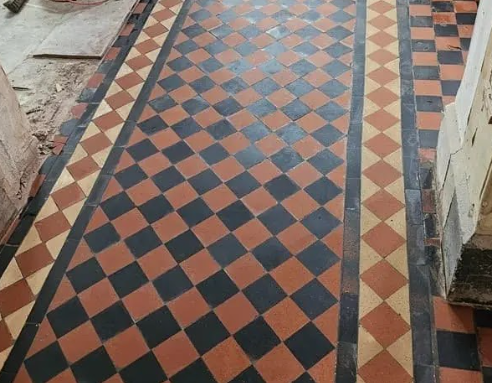
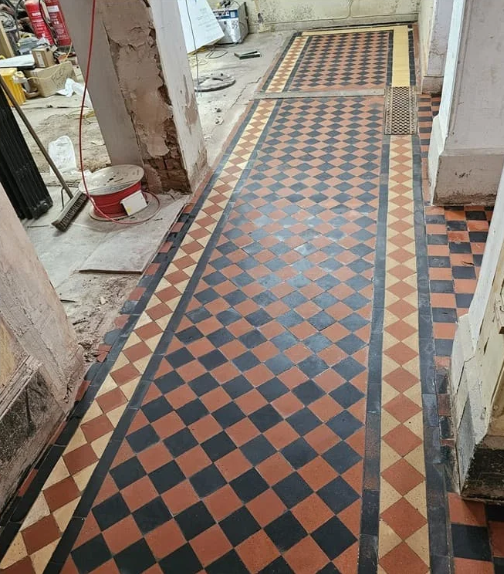
Restored quarry tile floor at Ipswich Museum After
Original Victorian quarry tiles carefully restored for a safer, more consistent and protected finish.

The project

Preserving an Original Victorian Quarry Tile Floor

Concrete & Stone Solutions was appointed to restore the original Victorian quarry tile floor at Ipswich Museum, a Grade II listed building dating back to 1881.

The challenge

Decades of material loss and surface abrasion had hollowed the softer red and yellow tiles, while the harder black tiles remained proud. The resulting uneven, heavily bevelled surface had become a significant trip hazard within a busy public building.

Our assessment

Because of the floor's age and historic significance, we specified a slow, highly controlled restoration system to reduce height variation, improve safety and preserve as much original material as possible.

The restoration process

A Controlled Historic Quarry Tile Restoration Process

The restoration demanded a slow and highly controlled approach. Specialist equipment followed the natural contours of the floor, reducing severe height variations without dishing the tiles or removing unnecessary original material.
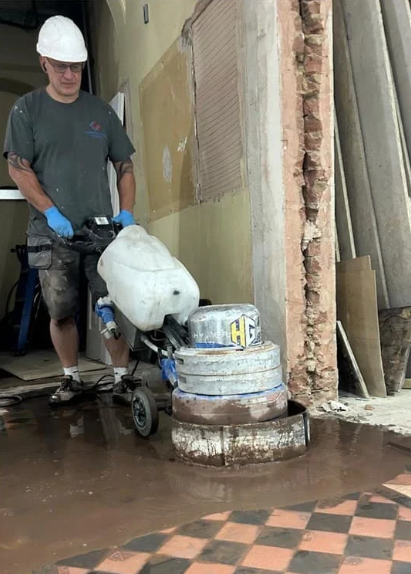
Specialist grinding equipment restoring the historic quarry tile floor at Ipswich Museum Controlled Grinding
Specialist grinding equipment followed the floor’s natural contours, reducing severe height variation while protecting the original tiles.
Historic quarry tile floor after controlled grinding and restoration at Ipswich Museum Finished Surface
The restored quarry tiles reveal the original geometric pattern and richer red, yellow and black tones, with a safer, more consistent finish.
  • Inspect and Plan

    The historic floor was assessed in detail so the restoration could be controlled around its varied tile composition.

  • Controlled Grinding

    Specialist grinding reduced severe height differences while following the floor's natural contours and avoiding dishing.

  • Protect the Black Tiles

    The thin black surface layer was protected carefully to prevent exposing the red clay body beneath.

  • Refine to 200 Grit

    Progressive refinement up to 200 grit produced a smoother, more consistent and scratch-free surface.

  • Enhance and Seal

    A colour-enhancing impregnating sealer enriched the red, yellow and black tones while improving protection and maintenance.

This considered sequence restored the floor's appearance while retaining the character and historic value of the original Victorian quarry tiles.

Free Site Survey

Preserve the past
protect it for the future

Tell us about your historic, Victorian or heritage tile floor. We’ll assess its condition and recommend a careful restoration approach that protects original material while improving safety, appearance and day-to-day usability.

01
Preserve Original Material We plan the work around the age, composition and condition of the floor, retaining as much original material and character as possible.
02
Improve Safety & Finish Controlled grinding and refinement can reduce severe height variation, improve safety and prepare the tiles for a protective, colour-enhancing seal.
Controlled Grinding Surface Refinement Protective Sealing

    Request your free survey

    Tell us a little about your surface or project and we'll get back to you.


    A quick photo can help us understand the surface and project.

    Your details are only used to respond to your enquiry.
    Privacy Policy